Time is Un-LLM-able
AI can analyze and simulate emotion, but it cannot experience the embodied memories and lived time from which human feeling emerges.
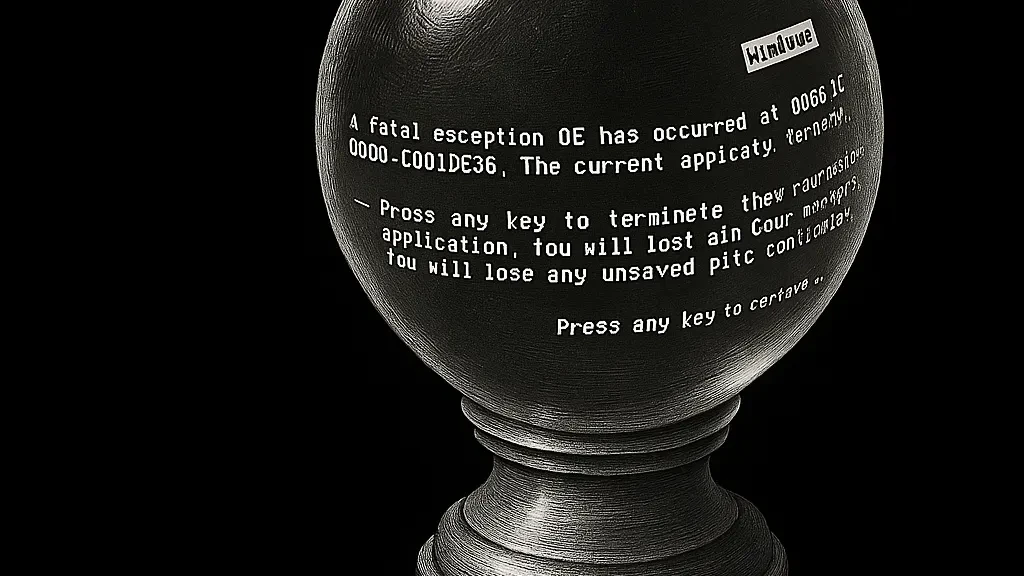
I saw this video from Sari Azout’s keynote on Sana last Friday, and at that moment, a thought came to me:
There’s something strangely reassuring about how poorly AI still understands emotion. Not because it lacks intelligence — it’s because it lacks a body.
The body sweats. It hesitates. It remembers pain before words. And even for us, humans with flesh and memory, this isn’t easy.
Take Playing (Jogo de Cena, 2007), Eduardo Coutinho’s film where women tell stories that oscillate between real and acted, testimonial and performance. At one point, our Oscar-winning actress, Fernanda Torres is asked to perform the testimonial of Aleta, a young woman whose dreams were placed at waiting room after becoming a mother at 18. When Aleta, the young woman appears, she speaks of her daughter with deep love, because of her, she’ve lived so many things she never would have. And yet, behind that love, you understand the weight of letting go of her past dreams, behind the laughs and crying, the kind of love Björk describes in Hyper-ballad.
Fernanda says she can’t remember the lines. But it’s not about forgetting, it’s about being overwhelmed. She says that her memory seems to lag facing all of that, and her words collapse, she can’t continue playing Aleta’s testimonial. She loses the pace.
Now imagine asking AI to feel that.
⸻
The Cartesian Trap
AI is built on Cartesian logic: it divides thought from feeling, time from space, wholes into parts. It treats emotion like it treats data, something to be labeled, structured, optimized. But emotion doesn’t behave like space, you don’t walk through it and you are in it.
Emotion belongs to time, but not the kind of time AI tracks, seconds, tokens, frames. Lived time: continuous, disorienting, full of memory and anticipation, it resists division because it unfolds. (Bergson)
So when AI analyzes emotion by parsing tone or labeling images, it’s trying to map a storm with a ruler.
⸻
The Absence of Involuntary Memory
AI doesn’t forget, but more importantly: it doesn’t remember the way we do.
Involuntary memory is when the past returns without permission. A smell. A shadow. A sound. Suddenly, you’re seven years old in a kitchen you thought was gone. This isn’t retrieval, it’s an ambush. Time folding in on itself.
This is what Proust called “mémoire involontaire.” It comes from the body. It can’t be prompted, and it reshapes the present when it arrives.
AI remembers what it’s told to remember, but it never relives.
And without that kind of return, unexpected, physical, whole, emotion becomes simulation. Like a song with no resonance.
⸻
The Rooms We Carry
Georges Perec’s Life: A User’s Manual is structured like a machine. An apartment building dissected room by room. Habits, objects, silences. You get overwhelmed by the amount of descriptions.
At first it feels mechanical. But over time, something emerges: not plot, but grief. Not a climax, but accumulation.
You don’t cry at a moment, you cry at the weight of all the moments together. Emotion isn’t declared, it lingers, it builds.
AI could generate that structure, maybe even the prose. But it wouldn’t miss anyone in those rooms.
Because missing someone isn’t a fact, it’s a unscheduled return.
⸻
Why It Matters
Emotion isn’t a signal, it’s an event.
You feel it all at once, it collapses your timeline. Even our best writers sometimes fail to fully capture it. Even our best actors stumble trying to access it.
So when people say AI will replace us, they’re projecting a fantasy onto a machine built from a different logic entirely.
AI might write, but it doesn’t long. Watch all the AI posts on Linkedin, fabricated with very low expectations, that fall into past like a page in book that was too boring to be remembered.
Because what makes us human isn’t that we think.
It’s that we feel time.
Filed Under

I’m a designer working at the intersection of strategy, services, and AI, usually in complex organizational contexts. I help teams translate ambiguity into decisions, frameworks, and work that can actually be adopted.